
How to Search Civil Dockets
For civil files in Common Pleas, Eastern County Court, or Western County Court, open the Ashtabula County Court Records page. Take its CourtView/eServices public-portal link from there. Municipal courts run on different systems. Ashtabula Municipal Court has its own Case Search service. Conneaut Municipal Court links to Court Connect. Field names and result labels in those interfaces vary from the county portal, so expect differences rather than a matching layout.
Know the likely court before you type anything. Have a case number handy, plus enough party detail for the route you pick. CourtView can lag behind recent filings. It also excludes older records past cutoff dates the county has set. A blank result usually means you are searching the wrong court, not that the case is hidden.
- Match the dispute to Common Pleas, an Eastern or Western county court, Ashtabula Municipal, or Conneaut Municipal.
- Open the official portal for that court rather than treating CourtView as a single countywide index.
- Use the case information accepted by the selected public portal.
- Read the dated docket history and any future civil setting.
- Call the clerk holding the file when a record is old, delayed, restricted, or needed in certified form.
Ashtabula Civil Docket Limits
Case type and dollar amount often point to the right docket. Common Pleas General Division handles the large civil actions. It also takes anything beyond a lower court's authority. Western County Court handles civil actions up to $15,000. Its small claims go up to $6,000. Disputes above $15,000, or any fight over title to real estate, go to Common Pleas. Ohio Revised Code 1901.17 sets the $15,000 municipal-court line, though statutory exceptions apply.
Treat these limits as a search aid. They decide nothing about jurisdiction in a real case. Territory, claim type, the parties involved, and statutory exceptions can all change the answer. If the court is unclear, call the clerk. Don't assume which portal should hold the civil record before that. The official jurisdiction statute is the source for the monetary threshold summarized here.
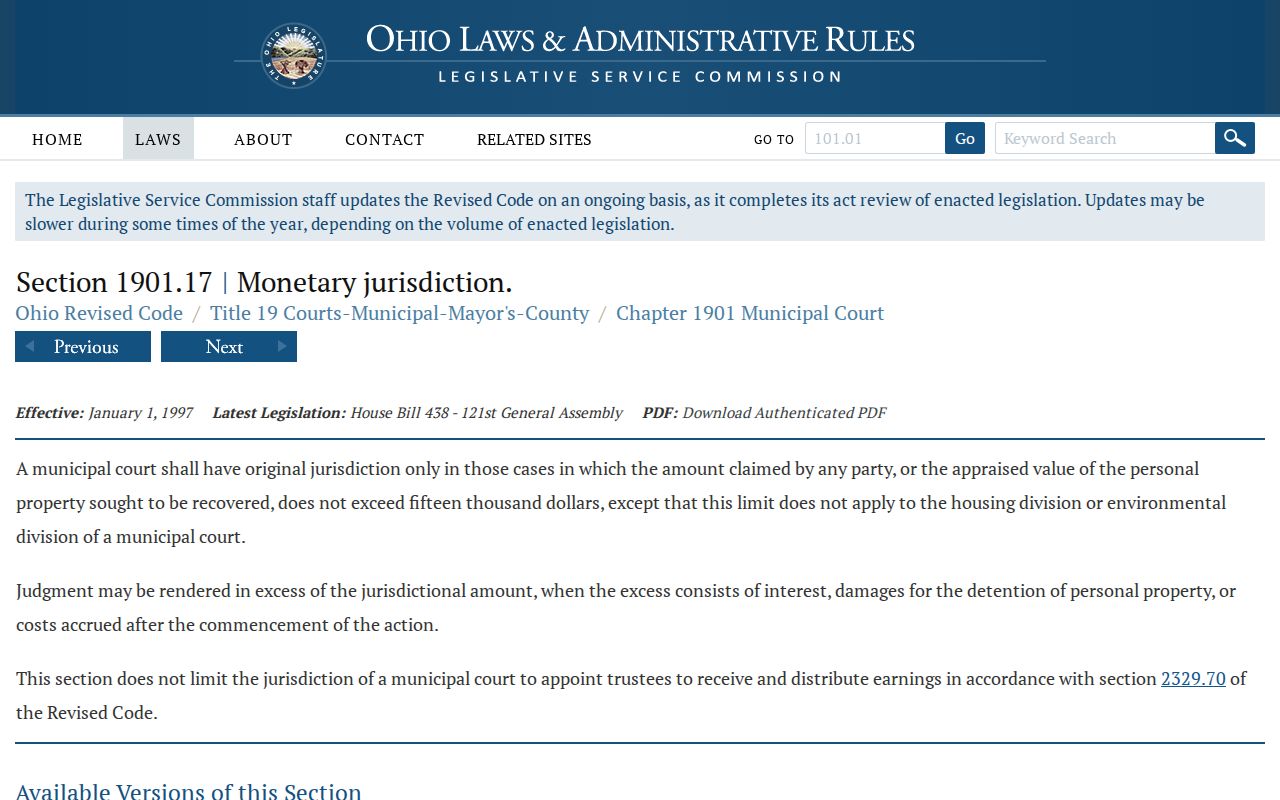
The dollar line helps you guess whether a record sits in a lower court or on a Common Pleas civil docket. It is still only a guess. Only the court itself can confirm where the case belongs.
What a Civil Docket Shows
CourtView describes its county content as public docket entries. It adds whatever information Ohio law requires it to post. In daily use, a civil docket works like a chronological index. It can locate the file and trace its procedural path. It does not promise that every filed paper, exhibit image, financial field, or local status code will show up remotely. For the real thing, use the clerk's case file. A certified copy stands apart from an online entry.
| Case number | The identifier assigned by the court; the research did not verify a universal public civil-number display. |
|---|---|
| Parties and court | The public caption and the court keeping the file, where the record makes them available. |
| Filings | Dated references to a complaint, response, motion, order, or other filed case action. |
| Settings | Scheduled or completed civil events, such as a hearing, trial, or conference. |
| Judgment activity | A judgment entry, dismissal, agreed entry, transfer, or similar docketed outcome, subject to clerk confirmation. |
Ashtabula Municipal Civil Search
Ashtabula Municipal Court keeps its civil and small-claims records off the Common Pleas CourtView route. The court publishes its own Case Search service. It also offers a direct Civil and Small Claims line at 440-992-7149. Call that number when the system is down. It also fits when the court location is unclear, or when a result needs a human check.
Conneaut Municipal Court is separate too, using Court Connect and listing its clerk at 440-593-7410. These split systems explain why a failed CourtView search proves nothing. The case may still exist elsewhere. Picking the right court matters more than running the same name search over and over. The official municipal-court subject-matter statute gives the legal background for municipal traffic, ordinance, and civil authority.
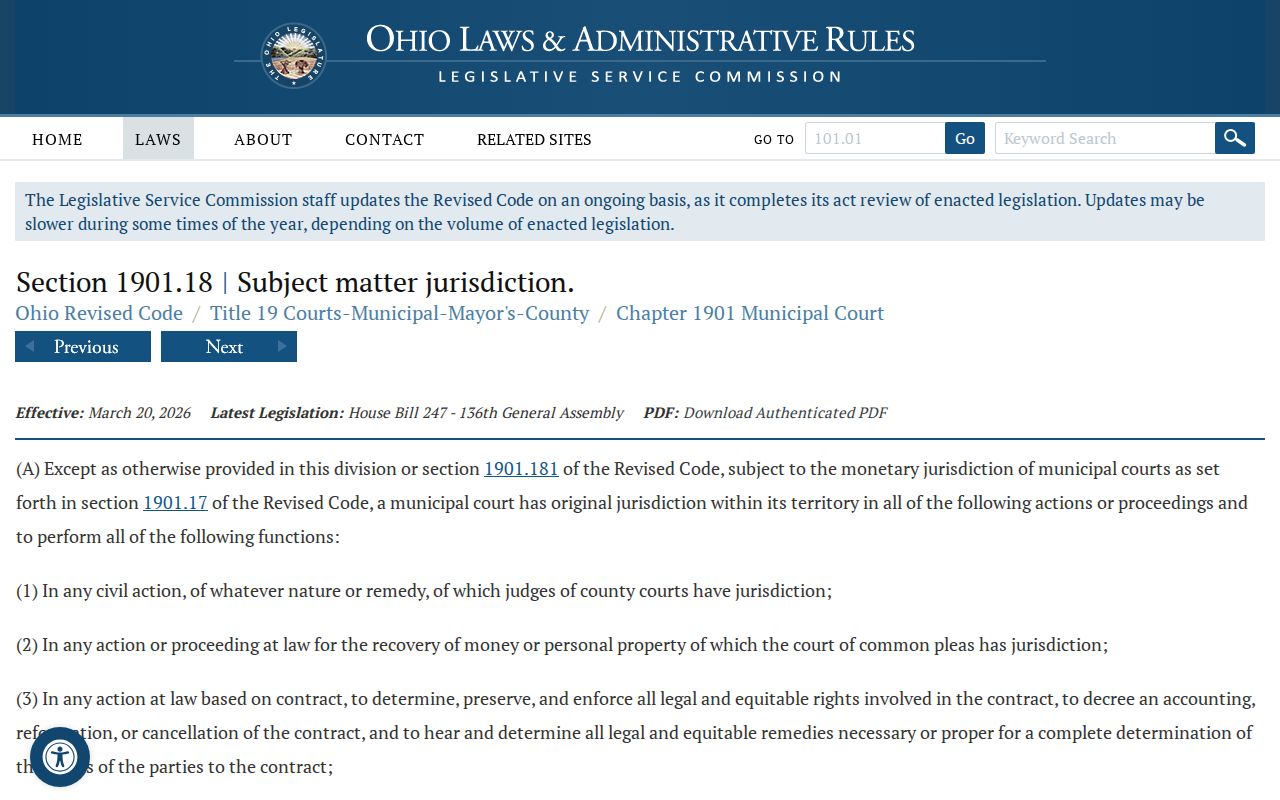
Read the statute for background. For the correct record route in a specific municipal case, rely on the court clerk.
Types of Civil Cases on the Docket
What appears on an Ashtabula County civil docket depends on which court holds authority. Common Pleas carries the larger civil actions and matters outside lower-court jurisdiction. County and municipal courts take limited civil and small-claims class matters within their territories. Domestic Relations and Probate sit in their own Common Pleas divisions with different access practices, so treat them separately from a General Division civil search.
- Common Pleas civil actions, including larger matters outside the lower courts’ authority.
- Limited civil cases in Eastern or Western County Court territories.
- Small claims within Western County Court’s stated $6,000 limit.
- Ashtabula Municipal civil and small-claims matters in the court’s territory.
- Conneaut Municipal limited civil matters reached through Court Connect.
Most civil cases follow a familiar arc. A complaint or petition comes first, then service, a response, motions, discovery, a setting, a ruling, a judgment entry, and sometimes post-judgment activity. That order explains the docket's sequence. Just do not expect every portal to use the same screen labels.
Ashtabula Consolidated Civil Cases
A transfer or consolidation can make later activity look like it vanished. That risk grows if a reader clings to the first case number found. Under Common Pleas local rules, an approved consolidated case lands on the judge's docket under the lowest case number unless the court orders otherwise. All documents tied to the consolidated matters get filed under that lower number.
So when a civil docket mentions consolidation or a related case, run a search on that cross-referenced lowest number. Decide the record went cold only after that check. The rule covers local filing practice, not a promise that every document appears online. To confirm the live file, the Clerk of Courts is the source. Request the underlying records through that office.
Settings and Hearings on Civil Dockets
A civil setting on an Ashtabula County docket can mean several things. It may mark a hearing, a trial, a conference, or a motion matter. For Common Pleas, Eastern, and Western cases, open the case-specific calendar in CourtView/eServices first. Then compare it against the county's weekly schedule reports. The schedule page notes those reports are updated weekly. It points readers to the Calendar in Court Records for any changes posted after the latest report.
One caution applies. A continuance moves a setting to a new date. It does not resolve the claim itself. Always read the newest dated entry, and when a future event looks unclear, confirm it with the court handling the matter. The Ashtabula County court calendar page lays out the full date-confirmation chain.
Ashtabula Civil Filing Context
Numbers help frame the municipal civil docket in Ashtabula. Ashtabula Municipal Court's 2025 Annual Report recorded 1,347 civil cases filed. That was a 16 percent jump from 1,164 the year before. This volume is why the municipal civil route matters. It deserves its own docket search and its own clerk contact, not a broad CourtView assumption. Remember what the figure is: court-level context. It is not a count of searchable results or an estimate for any one case.
The Ohio Supreme Court's eStats public reporting interface is another official outlet for court reporting. Treat it as a reporting tool. It is not an Ashtabula case-search portal, and it asks users to make court and jurisdiction selections before it shows anything.
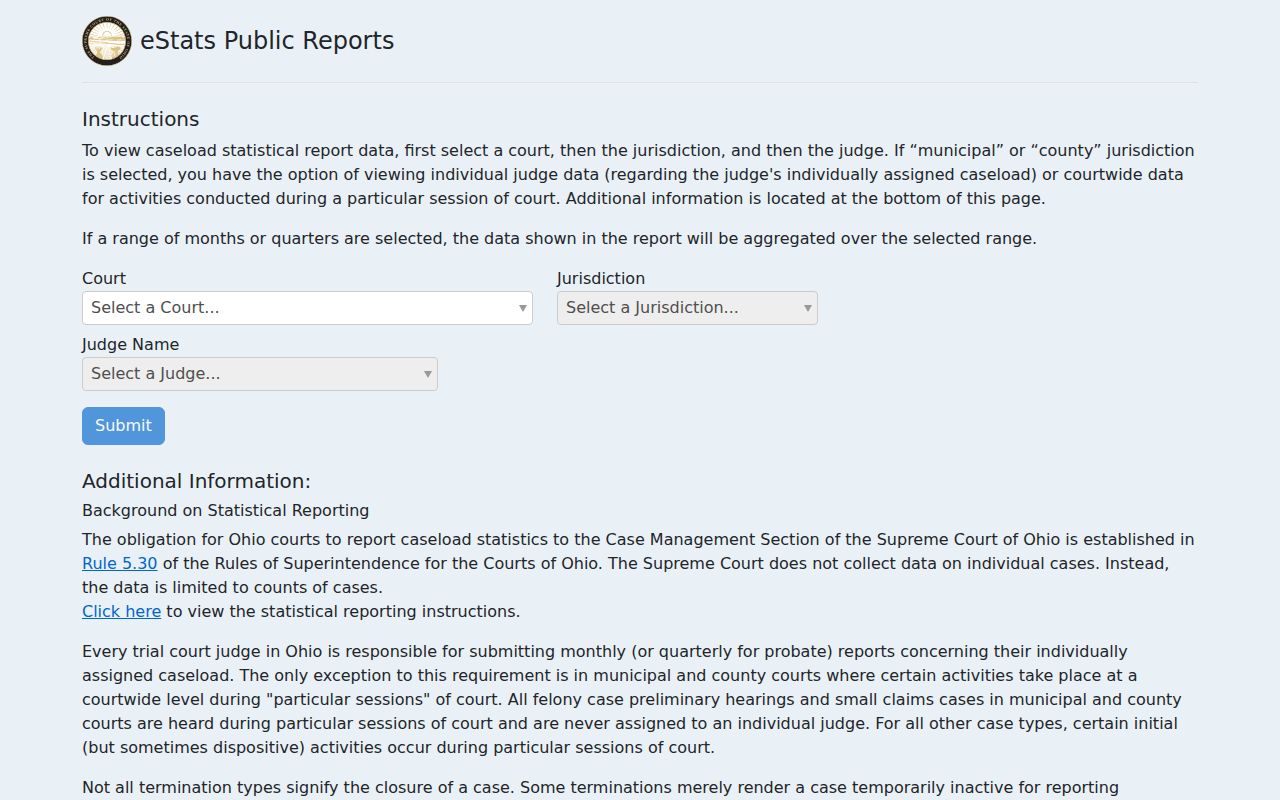
Keep the two jobs separate. A docket portal or the clerk finds a particular Ashtabula County case; reporting sources only supply the broader court context they actually document.
Public Access to Civil Dockets
Ohio Sup.R. 45 presumes that court records are open to the public. It calls for prompt direct access. Copies must arrive within a reasonable time, at actual cost, subject to lawful restrictions. The rule does not require every filed paper to be posted online. So a civil docket entry works as a public locator and chronology, while the full case file or a certified copy may still take a direct request to the clerk.
Some material stays guarded. Personal identifiers are protected under Sup.R. 44(H). Probate local rules also list confidential adoption, civil-commitment, and tax documents among other restricted items. In short, an open civil docket is not proof. A filing behind it may not be open to remote review.
Key Rules:
Ohio Sup.R. 45 - courts provide public access and copies subject to restrictions, direct-access practices, and reasonable costs.
Ohio Sup.R. 44(H) - listed personal identifiers must be omitted or protected in court records.
Ohio Revised Code 149.43 - the Public Records Act governs records held by public offices, alongside court-specific access rules.
Ashtabula Civil Docket and Copies
Three things get confused here: a portal index, a filed paper, and a certified copy. They are not the same. CourtView can help identify a Common Pleas, Eastern, or Western civil case, but it does not promise every historic record or a full set of document images. For direct access in Jefferson, call the Clerk Legal Division at 440-576-3637. The Records Room is 440-576-3716. Eastern Court is 440-576-3617, and Western Court is 440-466-1184.
Older civil matters run into the county's online limits. Clerk records before May 1993 are not in CourtView. The same goes for Eastern or Western records before January 1995. For those files, ask the court holding the case about inspection, ordinary copies, certification, and any court-specific requirements. A portal printout is not automatically a certified court record.
No posted copy-request form or fee schedule appears for Conneaut Municipal, Eastern, or Western civil files. So ask each clerk for its current process. Do not carry a policy over from another Ashtabula County court. That is a good way to get it wrong.