
How to Search Criminal Dockets
Each Ashtabula County court keeps its own criminal docket. There is no single search that spans them all. For Common Pleas, Eastern County Court, and Western County Court, begin at the County Court Records page. Its public portal leads into CourtView/eServices. Ashtabula Municipal Court runs a separate Case Search along with a Today’s Dockets service. Conneaut Municipal Court connects through Court Connect. None of those landing pages spell out which search fields each system offers, so expect the options to differ from one portal to the next.
Before you open any portal, know the person’s name or the case number. Guess which court holds the file. A docket entry can take time to appear after a filing or a judicial action. Older or restricted files may never show up online. When a docket search result needs verification, or you need a certified copy of a filing, use the clerk’s route for that court.
- Decide whether the matter is a Common Pleas, county-court, Ashtabula Municipal, or Conneaut Municipal case.
- Use CourtView/eServices for Common Pleas, Eastern, and Western entries, or the municipal court’s separate official service.
- Locate the matching public case record with the information the selected court accepts.
- Read the dated entry sequence and the newest future setting, if one is shown.
- Contact the responsible clerk for a delayed, old, restricted, or certified record.
Ashtabula Criminal Docket Routes
The court level matters more than any broad county-name search. Felonies generally land in the Ashtabula County Court of Common Pleas General Division, where the Ashtabula County Clerk of Courts keeps the records. Eastern and Western County Courts handle misdemeanors, OVI matters, traffic matters, and the early stages of felonies in their territories. A preliminary hearing or bind-over can appear at a lower court first. The felony then moves to Common Pleas.
| Likely matter | Public route | Direct fallback |
|---|---|---|
| Common Pleas felony | CourtView/eServices | Clerk Legal Division or Records Room |
| Eastern or Western county-court case | CourtView/eServices | The named county court clerk |
| Ashtabula Municipal criminal case | Case Search and Today’s Dockets | Municipal Criminal Department |
| Conneaut Municipal criminal case | Court Connect | Conneaut Municipal Court clerk |
CourtView’s county notice describes its coverage. It lists entries kept by the County Clerk, Eastern Area Court, and Western Area Court. It is not a statewide trial-court index. Nor does it turn a municipal criminal case into a CourtView case. The municipal interfaces list no verified field inventory either. Spotting this split at the start keeps you from reading a wrong portal as a missing-record answer.
What a Criminal Docket Shows
County materials describe CourtView as a source for public docket entries and information required by law. Read it as a chronological index. It does not promise that every document image, fee item, charge detail, or court field shows up in each result. Follow the docket from the initial filing. Track it through the later orders to the newest setting.
| Case number | The court’s identifying number. Common Pleas local rules illustrate 2016 CR 001; the public display format was not inspected. |
|---|---|
| Caption and court | The public case title and the court holding the record, where available. |
| Docket entries | Dated references to filings, orders, hearings, or other case action. |
| Settings | A future or completed event such as arraignment, pretrial, motion hearing, trial, or sentencing. |
| Disposition | An outcome or status shown by the record, which should be confirmed with the clerk when an official copy is needed. |
Ashtabula CR Docket Format
The Common Pleas General Division local rules give a concrete example of a criminal number: 2016 CR 001. The pieces are a year, the criminal CR designation, and a sequence number. It is only an example from the rules, though. It is no guarantee that every interface, current or historical, displays the same punctuation or every component.
Those same rules describe indictments, bills of information, and bind-over orders. They also explain that the Clerk relies on prior-case information and prosecutor certification when assigning matters among the three General Division judges. A confirmed co-defendant case stays with the first judge assigned. So the rules show how a Common Pleas criminal file gets organized. They do not supply portal labels.
Ohio offers no single statewide trial-court case search for this work. A Common Pleas number can help. It can link a lower-court felony stage to its later county file. Still, the court route decides where each public docket must be checked.
Stages on a Criminal Docket
A criminal docket often opens with a complaint, indictment, information, or bind-over order. From there it may list an arraignment, pretrial work, motions, a plea or trial, and a sentence or other final entry. Entry names and order vary by court and case. Trust the dated chronology over any guess about a universal screen layout.
Docket flow: Filing › Arraignment › Pretrial › Plea or Trial › Disposition › Sentencing
A felony that began in a county or municipal court does not end at the preliminary stage there. When the docket shows a bind-over or transfer forward, check the later Common Pleas record too. That lower-court entry is not the final trial.
Ashtabula CourtView Criminal Delay
A missing recent entry does not mean the case has no new event. The county’s CourtView notice warns that filing and judicial action can precede public posting. For a time-sensitive setting, compare the current case calendar with the court’s own schedule. Then ask the responsible office to confirm the next event.
The notice also sets a coverage boundary. Clerk records before May 1993 are not in CourtView. The same goes for Eastern or Western records before January 1995. For an older file, seek direct access. A clerk request works too. Skip searching the portal again and again.
Which Court Holds Criminal Dockets
Felony cases in Ashtabula County land in the General Division of Common Pleas, and the Ashtabula County Clerk of Courts keeps those criminal dockets. Below that sit the Eastern and Western County Courts. Each one handles misdemeanors, traffic cases, OVI charges, and the early steps of felony proceedings for its own territory, and their entries flow into CourtView/eServices within the county's posted limits. The two municipal courts work differently. Ashtabula Municipal Court and Conneaut Municipal Court hold their own limited-jurisdiction criminal records and run separate search routes rather than that county portal. Geneva adds a wrinkle. Its official police resource sends court matters to Western County Court, so a Geneva-area criminal docket usually begins there, not at a municipal portal.
Ashtabula Municipal Criminal Search
Ashtabula Municipal Court runs its own lookup tool. Its Case Search and Today’s Dockets service is separate from CourtView. The court announced it in March 2026. Do not assume it looks like CourtView or covers the same cases. Follow the route the court publishes for its criminal docket. Need a person instead of a screen? Call the Criminal Department at 440-990-2263, or the main line at 440-990-2263’s neighbor, 440-992-7109.
Conneaut takes a different path. Its official Municipal Court page points to Court Connect, and the clerk there answers a separate number, 440-593-7410. The county also has locally named programs: Ashtabula Municipal Recovery Court, Eastern County Veteran’s Court, and Conneaut Renewal Court. None of them offers its own public program-docket search. Start with the underlying criminal case lookup and work from the case number.
Public Access and Sealed Criminal Dockets
Ohio opens most of its court records to the public, yet that openness has limits. So a docket search that returns nothing does not prove a case never existed. The gap could come from a posting delay. Maybe the file is old, outside online coverage. Or the case sits in a different court's system. A restriction placed on the file can also explain the empty result. Juvenile records are not treated like adult criminal dockets, so do not expect them side by side. A criminal case that qualifies for sealing or expungement should not appear as an ordinary public result either. When access to a specific restricted file is in question, the sentencing court decides, not the search result.
Key Rules:
Ohio Sup.R. 45 - court records are presumed open through prompt direct access and copies, subject to restrictions and actual costs.
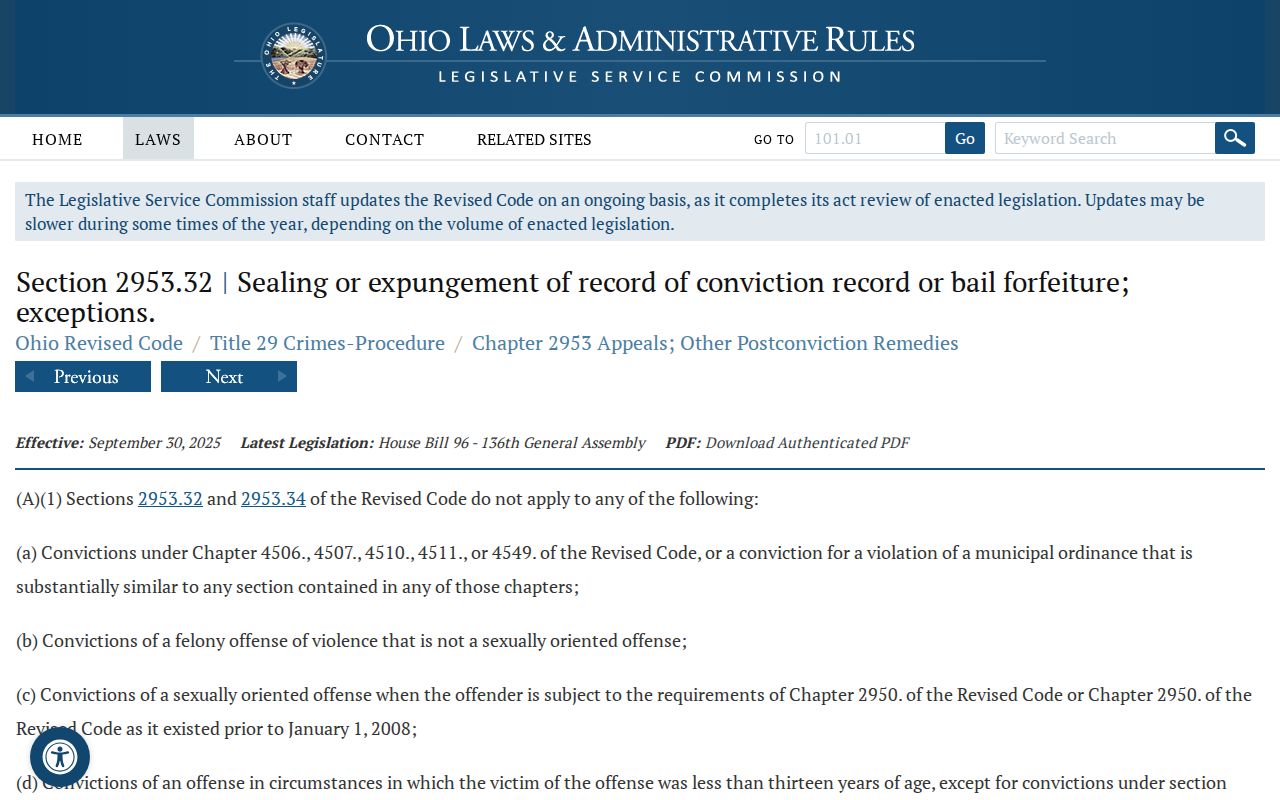
Ohio Revised Code 2953.32 - eligible people may seek sealing or expungement through the sentencing court under the statute’s rules.
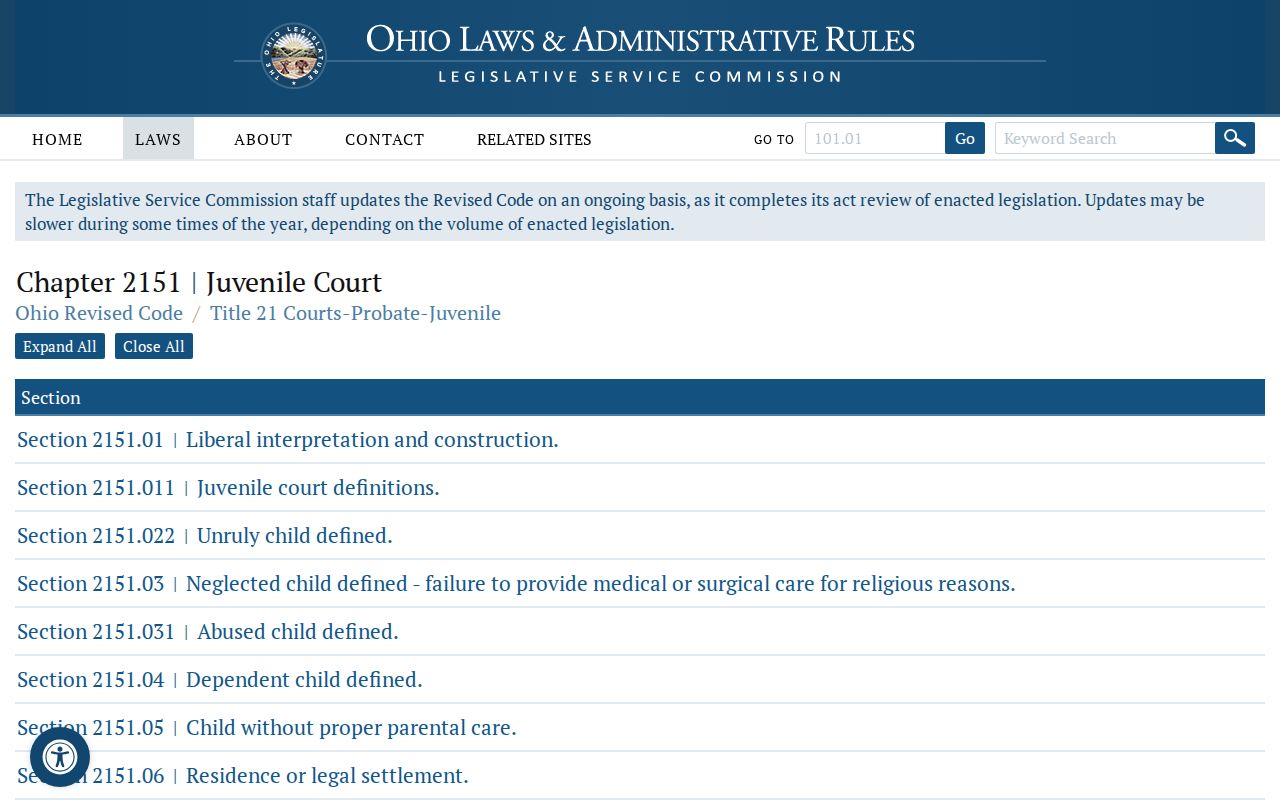
Ohio Revised Code Chapter 2151 - juvenile sealing provisions can limit the availability of juvenile court records.
Before relying on any general description of access, read the official Ohio sealing statute for yourself. It is the controlling law on what stays open and what does not, and it has nothing to do with any particular Ashtabula County case.
Questions about a sealed record go straight to the court that handled the matter. Name the court level and give the case context first, and the clerk can tell you where the docket stands.
Ashtabula Criminal Records at Clerks
Need a certified copy of an Ashtabula County criminal record, or one that is not online? The Clerk Legal Division takes calls at 440-576-3637, and the Records Room at 440-576-3716. Eastern Court has its own line, 440-576-3617. Western Court can be reached at 440-466-1184. Remember: each court keeps its own file. A case that started in a lower court and later moved to Common Pleas may need two separate requests. File one with each office.
Before you ask for any file, check how its access category is classified. The Ohio juvenile-records source spells out those categories under Ohio law. Read it first. It tells you whether a given juvenile docket is public at all.
The online docket is not the whole case file, so ask the clerk what route applies. Some records come by direct access, some by copy request, and some only by court order.